RITQ commences writeshops for the Certificates in Special Needs and Inclusive Education and in Islamic Education
The Research Institute for Teacher Quality (RITQ) recently facilitated two simultaneous development writeshops focused on developing the undergraduate certificate programs in Islamic Education and Special Needs and Inclusive Education (SNIEd).
Held from January 13 to 16, 2026, the development writeshops convened education experts across different Teacher Education Institutions (TEIs) to develop said undergraduate certificate programs in response to the Second Congressional Commission on Education (EDCOM 2)’s recommendation regarding the need for contextualization of curriculum content. The development of these certificate programs was guided by a diverse panel of teacher education experts, ensuring both programs meet international and local benchmarks for excellence.
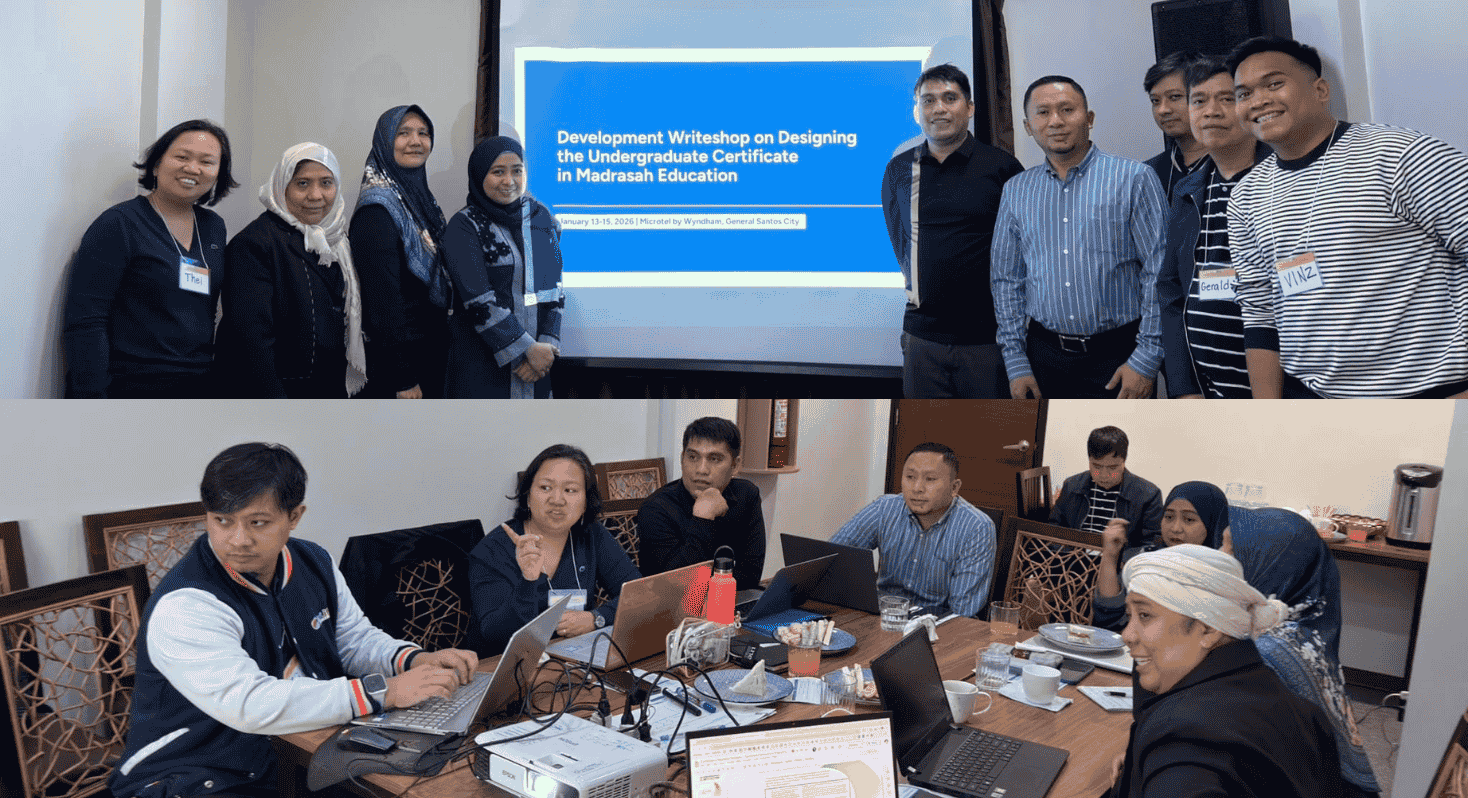
Certificate in Islamic Education Curriculum Development Team
In General Santos City, the Certificate in Islamic Education curriculum development team was composed of Dr. Jovar G. Pantao (Mindanao State University [MSU] – General Santos), Prof. Jamel R. Cayamodin (MSU Main), Dr. Nefertari A. Arsad (University of the Philippines [UP] – Diliman), Dr. Kartini R. Tahir (MSU Tawi-Tawi), and Prof. Esmaida H. Andang-Alaiden (MSU General Santos).
They collaborated to develop a certificate program that honors heritage while satisfying 21st-century standards. A significant decision was to adopt the program title “Certificate in Islamic Education” to encompass both traditional religious instruction and the Arabic Language and Islamic Values Education program.
Meanwhile, the Certificate in SNIEd curriculum development team featured the following experts: Dr. Marie Therese Angeline P. Bustos and Dr. Frances Olivia M. Magtoto (UP Diliman), Dr. Felina P. Espique (Saint Louis University), Prof. Katrin Lourdes P. Torre (Bicol University), and Dr. Shirley N. Cerbo and Dr. Zhanina U. Custodio (Philippine Normal University).
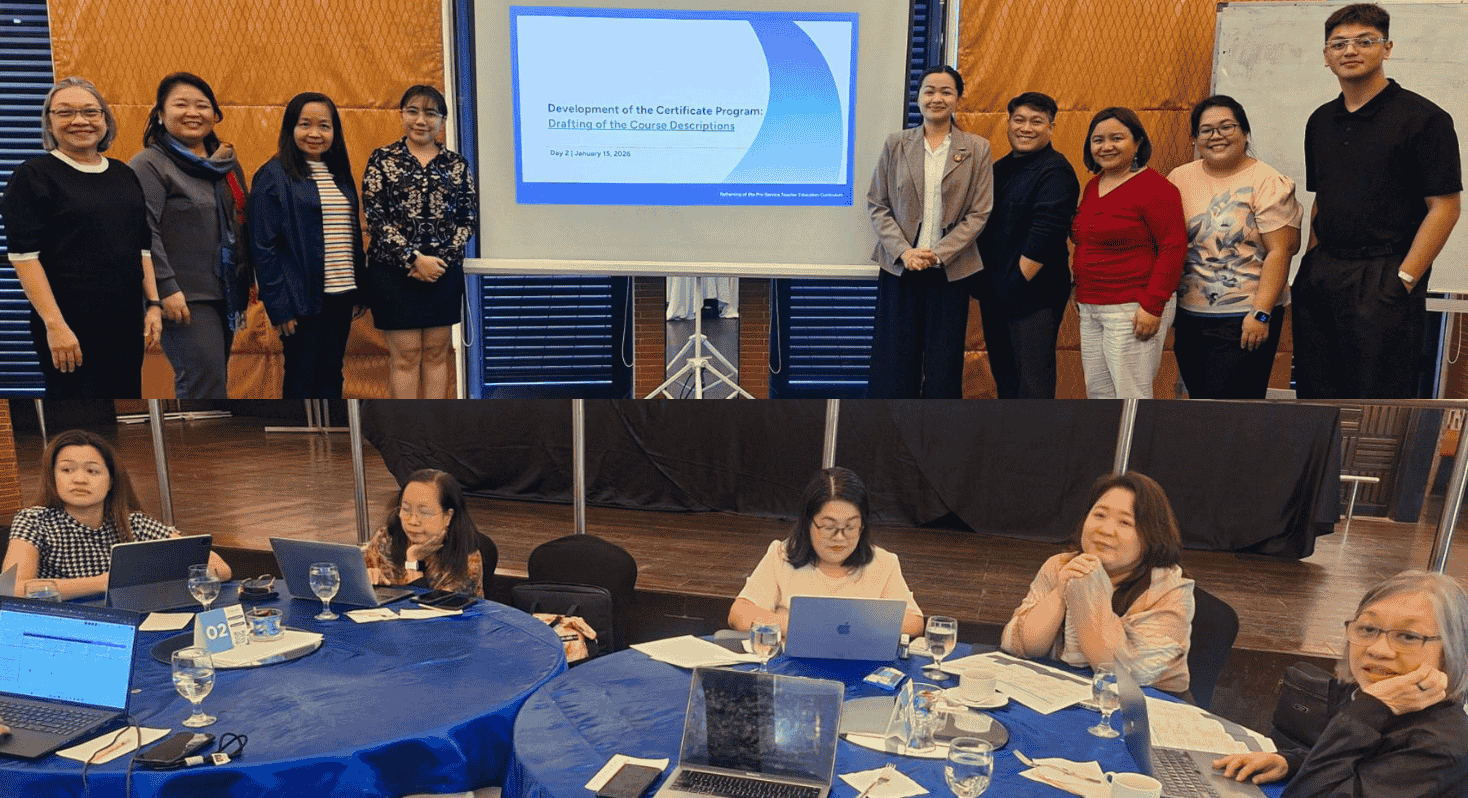
Certificate in Special Needs and Inclusive Education Curriculum Development Team
Held in Manila, the writeshop for the Certificate in SNIEd focused on ensuring that learners with exceptionalities are supported through inclusive classrooms and responsive teaching practices. Through SNIEd, pre-service teachers shall be capacitated to recognize learner diversity, address varying needs, and foster inclusive, supportive, and equitable learning environments in general education classrooms.
While the onsite writeshops have concluded, the work continues. The experts are now transitioning to remote work to develop the course syllabus guides after having the proposed certificate programs be subjected to an online national public consultation, which happened last January 23, 2026, engaging a total of 107 experts from different TEIs, agencies, and organizations. Stakeholders’ inputs not only strengthened and refined the initial outputs but also ensured the collective and collaborative processes in developing the proposed certificate programs, as informed by diverse perspectives and insights. (RITQ Communications)
https://www.ritq.ph/?p=6028NewsPre-Service Teacher Education,Reframing the Pre-service Teacher Education Curriculum,RITE,Teacher Education Council